Week 42: 12 – 18 October

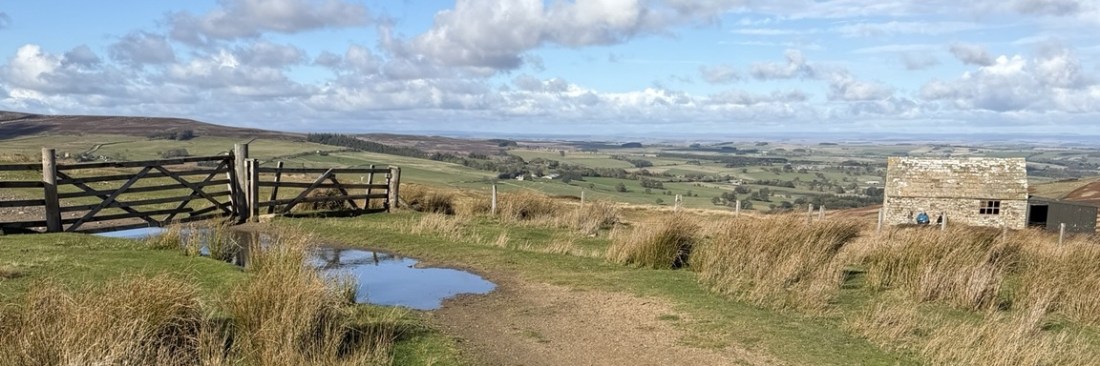
Northumberland trail and countryside beneath a bright blue sky

Run: 0h 58m (6.1 miles) | Cross Train: 0h 44m | Gym: 0h 00m

A week after Chester, there was no great urge to prove anything. The marathon had done its job, and this week was really about letting the body settle down and deciding what the next block should actually be for.

I did at least get back in the pool, which mattered after being disappointed to miss the previous week. It was only a short session, but getting swimming back into the routine felt more important than the numbers. There was also twenty minutes on the static bike: useful movement without asking the legs to absorb any more impact.

Running returned gently. Saturday was an easy 5K with the dog and it was good simply to get the legs moving again, although the hamstrings started tightening by around two miles. Nothing dramatic, but enough of a reminder that a marathon doesn’t stop taking its toll just because the medal has been put in a drawer.

I went out with the dog again on Sunday for just over three miles. It felt easy enough, but the heart rate told a slightly different story: 3.01 miles in 27:15, averaging 140 bpm. Seven days after Chester, and with the remnants of the illness still hanging around, that feels like another sign that recovery isn’t quite complete yet. Useful information rather than a problem, particularly before starting the MAF experiment — there is little point forcing the pace while the body is still asking for patience.

There was plenty of walking too, including a couple of decent outings in Northumberland. I don’t count walking in the training totals, but this week it probably says more about what I needed than another formal session would have done: time outside, movement, and no pressure to turn everything into training.

The more interesting development happened away from the stopwatch. With nine weeks before the London training block begins, I’ve been debating whether to use them to chase some 5K speed or do something rather different and work almost entirely on aerobic efficiency.

MAF has won.

For the next block I’m going to treat it as a proper experiment rather than vaguely ‘running easy’. I’ll repeat the same treadmill test each Monday and see whether, over the nine weeks, I can gradually run faster at the same heart rate. Static cycling can add aerobic volume without adding more pounding.

The exact starting ceiling still needs a little judgement. The theoretical MAF figure is 131 bpm, but the lingering cough, marathon fatigue, tight hamstrings and today’s unusually high heart rate are all reminders not to confuse a neat experiment with sensible recovery. Once those have settled, keeping the test conditions consistent should give me something useful to compare from week to week.

After months of tempos, marathon pace and trying to make sessions fit around a target, there is something quite appealing about making the next nine weeks deliberately boring. One number. Lots of patience. And hopefully, by December, some evidence that boring can be useful.
Week 41: 5–11 October

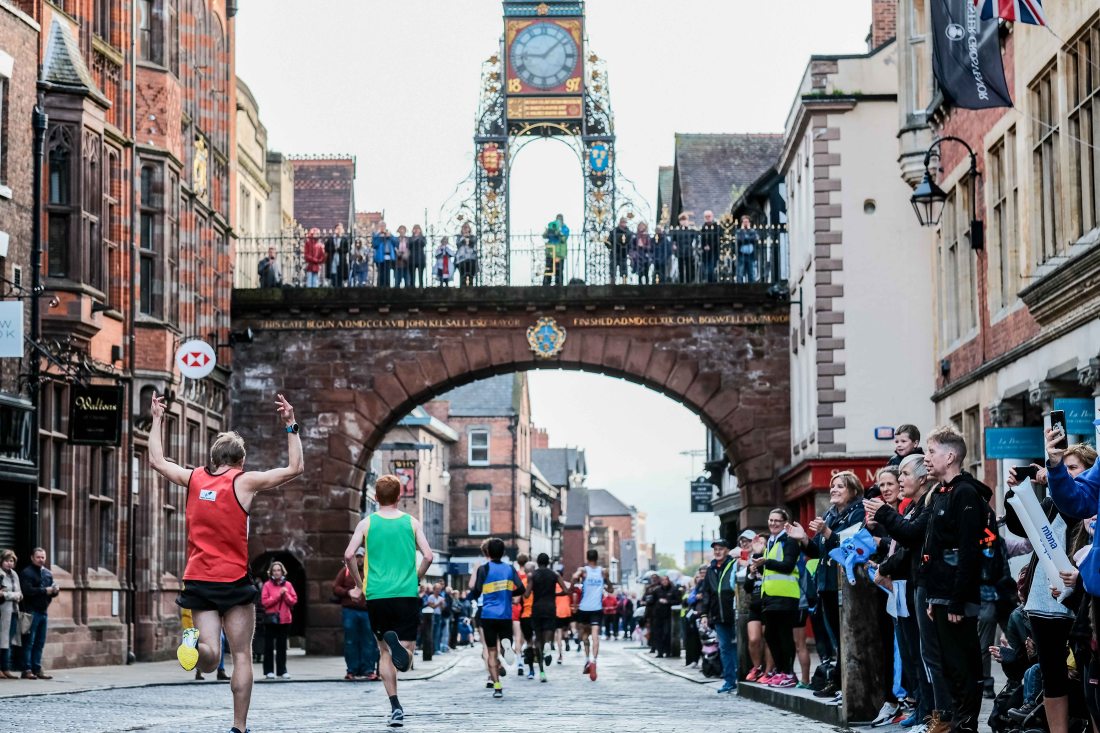
Chester Marathon runners passing beneath Eastgate Clock.

Run: 5h 14m (39.8 miles) | Cross Train: 0h 00m | Gym: 0h 00m

Well, I ran a marathon.

I wasn’t sure that I’d be saying that a couple of weeks ago…

The build-up to Chester was rather different from the one I had imagined a few months ago. The 2:57 target has been put back to London in April. After the illness, and missed sessions and tight legs, the aim was to get to the start feeling reasonably healthy and remind myself what running a road marathon actually feels like. It has been three years since the last one. Apparently, they haven’t got any shorter.

Tuesday was my first run since the previous Wednesday. The throat was better, but there were still a few lingering cold symptoms and the legs felt tight. The easy runs that followed were about getting moving again, rather than proving anything. Heart rate remained a little high for the pace, so there was no temptation to squeeze in the training I had missed. A couple of small strides on Thursday were enough; the cold morning was a good reason to keep things gentle.

I was disappointed to miss my swim this week. Even when there is a scheduling problem with the coach, I need to be a little more disciplined about making it happen. This week, though, the marathon rather took over.

By Friday I felt relaxed about Sunday. The rough plan was to enjoy the first ten miles, then hold or push for the next ten before reassessing with 10km to go. Sub-three was off the table; the right side of 3:10 would have been nice, but I was happy to see what the day brought. No pressure on the clock did not mean forgetting that there was still a very long way to run.

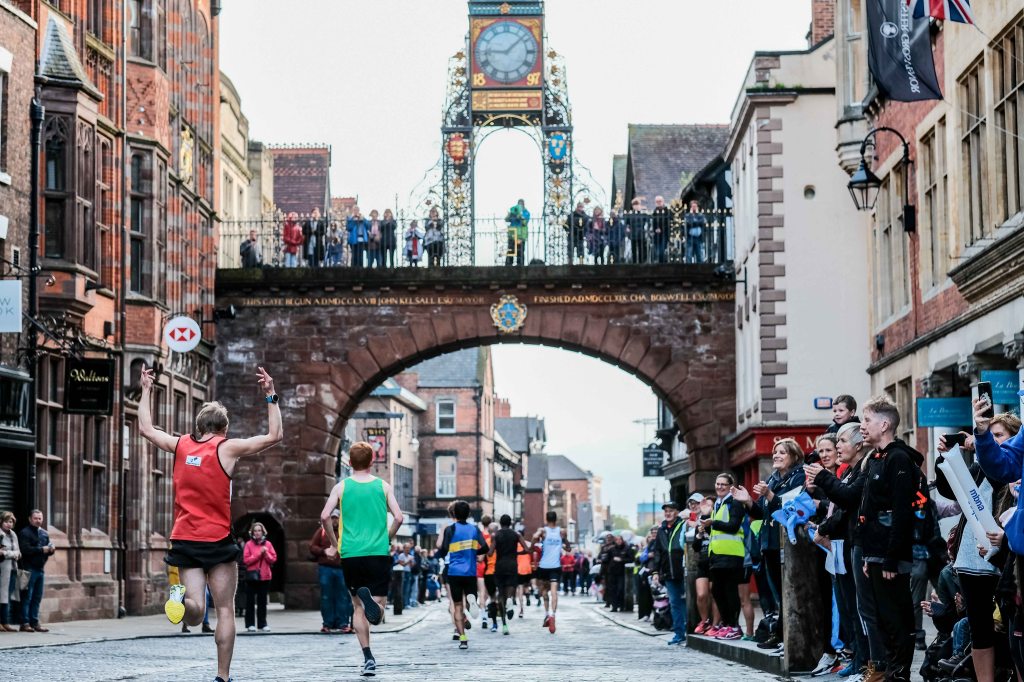
Chester Marathon runners passing beneath Eastgate Clock.
Chester Marathon beneath Eastgate Clock, 2019. Photo: Visit Chester / In Chester Walls.

Race morning was straightforward: porridge with honey two hours before the start, two black coffees and some Lucozade to sip. No overnight snack. I carried six gels, with a plan to collect another three on the course. I also avoided drinking excessively before the start, relying on the previous day’s hydration and the regular water stations rather than setting myself up for an early toilet stop.

I felt strong through the first nine miles, although I wondered whether the early part of the course was helping. The splits put that feeling into context: those nine miles averaged about 7:10/mile, with mile nine at 7:11 and an average heart rate of 167bpm. The hills clearly influenced individual miles — mile four was 7:20 at 171bpm with a climb, while the downhill fifth mile was 6:57 at 166bpm — rather than the opening section being uniformly downhill. It was a familiar feeling after the Great North Run. With no further proper strength, tempo or long runs since then, there was only so much endurance I could expect to call on.

With ten miles still to go, I consciously eased the effort. That was a sensible adjustment to keep the race controlled. Interestingly, the pace did not change immediately: mile sixteen was still 7:11 at 173bpm and mile seventeen 7:14 at 175bpm. The first clear slowdown came at mile eighteen, at 7:41, with heart rate still averaging 175bpm. So my decision to ease back and the change visible on the watch were not quite the same moment. The final 10km felt like survival, and the later splits reflect that: miles twenty-one to twenty-six averaged about 8:18/mile, compared with roughly 7:10 for the first seventeen. Heart rate stayed between 175 and 177bpm across those final six full miles, despite the slower pace, and reached an average of 179bpm in the last recorded 0.3 miles. Slower certainly did not feel easier. Heart rate alone cannot tell the whole story, but the figures sit alongside the memory of working hard to keep moving. I stayed committed and kept running to the finish, and I’m pleased with that bit of mental toughness.

The admin side went very well. Zero GI issues, water at every station, no dizziness and no chafing. Conditions were cool but bright, and the fuelling and hydration felt pretty much bang on. Those are useful things to take from the day, particularly with London already in mind.

The hamstrings and deltoids were very tight afterwards, but the immediate verdict, fifteen minutes after finishing, came with a big smile. I had adjusted to the fitness I actually had, made a sensible decision when it mattered and kept running to the finish. London can have the stopwatch.

For now, I’m looking forward to recovery, some easy autumn running and that trip to the Lake District. Maybe I’ll explore some MAF training…

Week 40: 28 September – 4 October

A quiet leaf-covered path beneath autumn trees, with countryside beyond.

Run: 2h 10m (14.8 miles) | Cross Train: 0h 33m | Gym: 0h 00m

This was a cautious week of getting back into a regular routine. The running total was modest, but after a disrupted spell it was good simply to string some easy runs together again without feeling any need to chase the mileage.

The runs were all kept easy and deliberately low-key. Heart rate was still higher than it should normally be for the pace and effort, although that is probably to be expected while getting back to normal after illness and time away from running. For now, simply being able to run comfortably again feels more useful than turning every outing into a fitness test.

I also had my regular half an hour in the pool with my swim coach. Swimming at the moment is almost entirely technique-focused, so the clock is fairly irrelevant. The work is still about slowing the stroke down, improving the breathing and trying to make the whole thing feel a little less hurried.

Next week’s focus is on getting the legs moving normally again. I’ll introduce a little faster running or tempo work if everything continues to settle, but only in small doses. There is no fitness to be gained by suddenly trying to squeeze missed sessions into the final few days. With Chester Marathon now very close, arriving healthy matters rather more than trying to rescue the training block at the last minute.

Beyond Chester, I’m actually looking forward to taking the pressure off for a while. Autumn is probably my favourite time to run, so there should be a few weeks of easy running simply because I fancy going out, rather than because a training plan says I should. I’m particularly looking forward to a trip to the Lake District after the marathon — hopefully with no pace targets, no tempo miles and considerably more interest in the scenery.

Week 39: 21–27 September

Run: 0h 27m (2.5 miles) | Cross Train: 0h 33m | Gym: 0h 00m

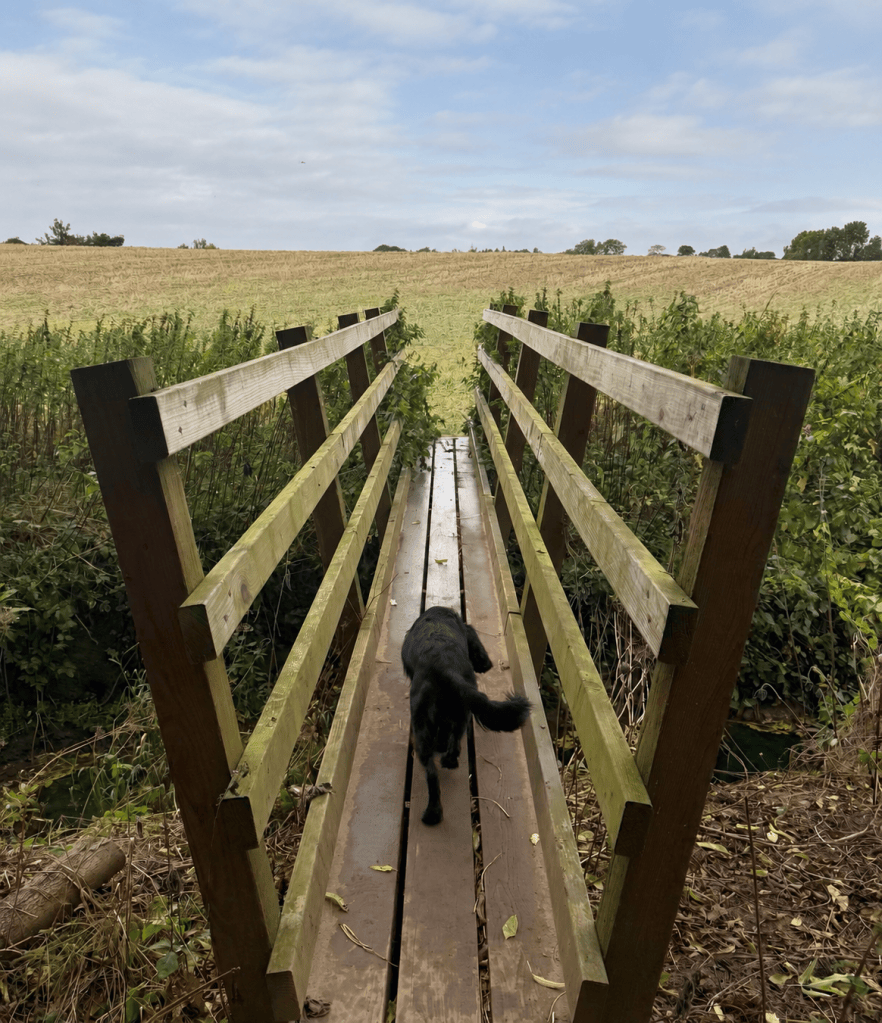
Black cocker spaniel crossing a wooden footbridge beside a field under a lightly blue overcast sky.

Exercise this week has been almost entirely dog-walking, whilst waiting for the cough to clear and trying not to make a bad situation worse.

By Friday I was still coughing, although less than earlier in the week, and still hadn’t managed a test run. With Chester getting very close, I’ve more or less accepted that it is no longer going to be the sub-three-hour attempt I had been training towards. That’s frustrating after putting together a decent block through the summer, but there isn’t much point pretending the last couple of weeks haven’t happened.

The thinking now is that Chester may end up being an extended easy run rather than a race. If I get there feeling reasonably healthy, one option is to run the first half very conservatively and then pick things up if everything feels good. More importantly, everything from here starts to feed into London in April. There is probably more value in arriving at that training block healthy than trying to rescue a marathon performance from a fortnight disrupted by illness.

I did at least get back in the pool this week. I’m still rushing the stroke, particularly on the left side, and struggling to get enough air in. The focus is on keeping my head flatter in the water and rotating sideways rather than lifting it to breathe, with a little more rotation to get my mouth properly clear. It remains one of those things that sounds very straightforward when somebody explains it from the side of the pool.

Sunday finally brought a very tentative 2.5-mile test run. There was no headache, nausea or anything concerning in the chest, which was encouraging. My throat is still noticeable painful when swallowing, though, and the hamstrings felt surprisingly tight after the lay-off. Heart rate was also much higher than I would normally expect for the pace, although after nearly two weeks without running while fighting off a virus that probably isn’t especially surprising.

So, 2.5 miles is hardly the triumphant return I might have imagined at this point in a marathon plan, but at least it is a start. I’ll try another short and easy run tomorrow and see whether the heart rate and general feel begin to settle. There is certainly no mileage to be made up now.

Week 38: 14 – 20 September

Run: 0h 00m (0.0 miles) | Cross Train: 0h 34m | Gym: 0h 00m

There are weeks when the training plan dictates what happens, and there are weeks when your body makes the decision for you. This was very definitely one of the latter.

I came into Monday with sore quads from the Great North Run and was quite happy to take a complete rest day, other than walking the dog. After that, though, what should have been a straightforward few days of post-race recovery turned into something rather different.

By Tuesday a bad throat and cough were properly established, which meant another day without training. Then on Wednesday morning I fainted in the shower. I have a recognised vasovagal sensitivity, so the episode itself wasn’t entirely unfamiliar territory; tiredness, stress and a viral infection just seemed to provide the perfect combination. It did, however, make the decision about whether I should train that day remarkably straightforward.

The only recorded training of the week was my first swimming lesson back after the summer on Friday. Even that wasn’t particularly convincing. We’re trying to move my breathing from every two strokes to every three, which means breathing to both sides, and I was struggling for breath on the left. It was difficult to know how much was technique and how much was simply the lingering virus. Either way, 725 metres was enough.

The difficult part of a week like this isn’t really missing the running. It’s watching the calendar move on while doing it.

Chester Marathon is now only three weeks away and I haven’t run since the Great North Run. I’ve spent months building towards a sub-three-hour marathon, so inevitably there’s a temptation to start calculating how much fitness I’m losing and how quickly I can get back into the Hansons Marathon programme.

I’m trying not to do that.

Amsterdam Marathon is a week after Chester and has suddenly become a possible alternative. There appear to be resale places available and, rather conveniently, my daughter will be in Amsterdam that weekend playing hockey. An extra week sounds attractive after losing this one, although it may prove fairly meaningless: if the virus takes long enough to clear that I’m no longer in shape to have a proper crack at sub-three, seven extra days aren’t magically going to fix it.

So for now there isn’t a decision to make. The priority is simply getting well enough to run again.

It’s frustrating, but perhaps there’s something useful in weeks like this too. Serious training encourages you to believe that progress comes from continually doing more. Occasionally the more difficult discipline is accepting that doing absolutely nothing is the thing most likely to get you where you want to go.

Week 37: 7 – 13 September

Run: 5h 09m (39.1 miles) | Cross Train: 0h 00m | Gym: 0h 00m

A deliberately lighter week ahead of the Great North Run, keeping some quality in the legs without carrying unnecessary fatigue into Sunday.

The main session before the race was Tuesday’s treadmill work, with faster running surrounded by plenty of recovery. After that the mileage tapered away: easy running, a short Thursday outing and a very brief Saturday shakeout.

Sunday was the Great North Run. I finished in 1:27:25, running strongly through the first nine miles before easing the effort a little as heart rate sat stubbornly in the 170s. The race averaged 170 bpm and peaked at 177, so it was a proper effort without completely emptying the tank.

Great North Run 2026 finisher medal

With the Chester Marathon the main target, the compromise made sense to me. A half marathon four weeks out needs to test the fitness without becoming the event that derails the marathon build.

The result is a useful marker: a strong first part of the race, a conscious decision not to chase the clock at any cost, and further evidence that the marathon work has put me in decent shape.

Week 36: 31 August – 6 September

Tyne Bridge and Newcastle quayside in early morning light

Run: 7h 09m (53.1 miles) | Cross Train: 0h 00m | Gym: 0h 00m

The mileage has come back slightly from last week’s peak but still lands above 50, with another strong tempo session sitting in the middle of it.

Thursday brought the week’s key benchmark: a nine-mile tempo averaging 6:37/mile. Tuesday contained another block of faster work and recoveries.

The weekend has been deliberately less dramatic than last week: 10 miles on Saturday and another 10 on Sunday, both controlled in the mid-7:30 range. The heart-rate figures were almost identical, a nice sign of consistency.

With the Great North Run only a week away, the heaviest work is now in the bank.

Week 35: 24 – 30 August

Run: 8h 24m (60.8 miles) | Cross Train: 0h 00m | Gym: 0h 00m

This has been the biggest running week of the block so far: just over 60 miles and more than eight hours on my feet.

Thursday brought another eight-mile tempo, again averaging 6:41/mile. Tuesday was another interval session with substantial recovery running around the faster work.

The weekend then asked the real question. Eight miles on Saturday was followed by 16 on Sunday at about 7:39 pace, average heart rate 146. Finishing the highest-volume week with a controlled 16-miler is a particularly reassuring marker.

Worn running shoes and water bottle after a long run

This is where marathon training starts to become less about individual workouts and more about managing accumulated fatigue. There has been a lot of work this week, but the final long run remained controlled.

Week 34: 17 – 23 August

Rolling Northumberland road in soft morning light

Run: 7h 18m (54.0 miles) | Cross Train: 0h 00m | Gym: 0h 00m

Fifty-four miles this week and another solid chunk of marathon-specific work.

Thursday brought the main benchmark: an eight-mile tempo averaging 6:41/mile. With the warm-up and cool-down around it, the full session came to just over 11 miles.

The weekend has again used the Hansons-style cumulative approach rather than one giant long run: about 10 miles on Saturday and 12 on Sunday, both in the mid-7:30s per mile. Sunday’s average heart rate of 148 reflects the accumulated work in the legs.

The fitness is being built through repeated good weeks rather than one spectacular session.

Week 33: 10 – 16 August

Run: 6h 32m (48.2 miles) | Cross Train: 0h 00m | Gym: 0h 00m

Just under 50 miles this week, with the familiar rhythm of intervals, tempo work and steady mileage becoming well established.

Running shoes beside a long quiet road

Tuesday was three 1600m repetitions, with heart rate peaking at 178. Thursday brought a six-mile tempo averaging 6:39/mile, giving me another useful comparison with the previous week’s tempo.

The weekend has been about accumulating rather than racing: 10 miles on Saturday at around 7:37 pace followed by another 10 on Sunday, this time closer to 7:24. Heart rate remained controlled on both.

This has been a well-balanced marathon week — hard sessions hard enough to matter, easy running easy enough to recover, and useful mileage arriving without needing a heroic Sunday.