Does training more actually make you faster?

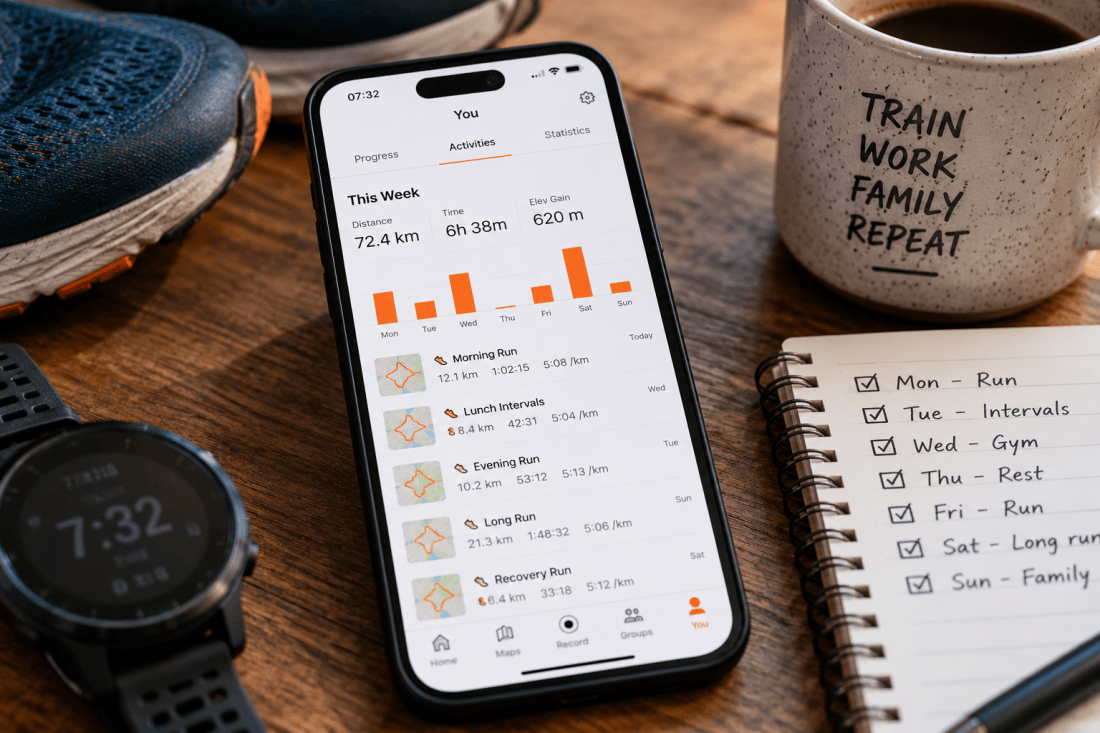
Running shoes, watch, coffee and training planner surrounding a phone displaying a weekly running workload feed.

There was a period when I thought getting fitter largely meant doing more.

I’d be up before 6am and could train hard for two hours before starting work. Coffee would get me through the morning and, despite the early start, I often wouldn’t get to bed until close to midnight.

Everything felt rushed.

Work was busy enough that getting away from my desk for a lunchtime session often seemed impossible. Three evenings a week I’d run at least 10k while my son was at football training, because it seemed an efficient way of squeezing another session into the day. On the other evenings I was usually knackered. Once I sat down on the couch, getting back off it was increasingly difficult.

I was training a lot, but I seemed to spend much of the time feeling as though I was operating somewhere close to the edge.

More recently, something has changed.

My latest marathon block actually involved less training time than the periods when I was preparing for long trail races and 70.3 triathlons. Yet I generally felt sharper and in better fettle. I had more energy for work and, importantly, more energy for the kids.

I’ve also managed to reprioritise work enough to free up some time at lunchtime. Getting a couple of sessions done during the working day has taken some of the pressure away from those early mornings. I still need to get better at going to bed earlier, but it feels as though things are moving in the right direction.

Is working harder actually making us better?

Clearly, endurance sport requires work. There probably isn’t a clever shortcut that allows us to avoid the miles, the harder sessions and the consistency required to improve.

But perhaps the important number isn’t simply how much training we can complete.

Perhaps it is how much training we can recover from and adapt to.

A two-hour session before work doesn’t exist in isolation. If it means getting up before 6am after less than six hours’ sleep, rushing into a stressful working day, relying on caffeine to stay alert and then training again that evening, the physiological cost of that session might be rather different from the same workout performed by somebody who is properly rested.

Training itself is only the stimulus. The improvement comes afterwards.

That makes me wonder whether I spent periods accumulating an impressive amount of training without necessarily giving my body enough opportunity to benefit from all of it.

There is also a wider question about what we’re actually trying to optimise.

If another five hours of training each week produces a small improvement in race performance but leaves me permanently tired, less productive at work and with less energy for my family, is that actually better performance?

I’m increasingly unconvinced that it is.

Perhaps the aim isn’t to discover the maximum amount of training I can physically squeeze into seven days. It is to find the minimum effective training required to produce the improvement I’m looking for, then make sure I can absorb it.

That doesn’t mean making training easy.

The interesting possibility is almost the opposite: by removing some of the unnecessary volume and improving recovery, perhaps I can arrive at the sessions that really matter capable of working harder.

Less training. Better training.

So what does the evidence say?

That is what I want to explore.

How much does sleep affect endurance performance and adaptation? What happens when training load is combined with significant work and family stress? Can reducing volume while protecting the important sessions actually make an amateur endurance athlete faster?

And perhaps most importantly for somebody trying to fit endurance sport into an otherwise fairly normal life:

Where is the point at which doing more stops making us better?

Week 42: 12 – 18 October

Northumberland trail and countryside beneath a bright blue sky

Run: 0h 58m (6.1 miles) | Cross Train: 0h 44m | Gym: 0h 00m

A week after Chester, there was no great urge to prove anything. The marathon had done its job, and this week was really about letting the body settle down and deciding what the next block should actually be for.

I did at least get back in the pool, which mattered after being disappointed to miss the previous week. It was only a short session, but getting swimming back into the routine felt more important than the numbers. There was also twenty minutes on the static bike: useful movement without asking the legs to absorb any more impact.

Running returned gently. Saturday was an easy 5K with the dog and it was good simply to get the legs moving again, although the hamstrings started tightening by around two miles. Nothing dramatic, but enough of a reminder that a marathon doesn’t stop taking its toll just because the medal has been put in a drawer.

I went out with the dog again on Sunday for just over three miles. It felt easy enough, but the heart rate told a slightly different story: 3.01 miles in 27:15, averaging 140 bpm. Seven days after Chester, and with the remnants of the illness still hanging around, that feels like another sign that recovery isn’t quite complete yet. Useful information rather than a problem, particularly before starting the MAF experiment — there is little point forcing the pace while the body is still asking for patience.

There was plenty of walking too, including a couple of decent outings in Northumberland. I don’t count walking in the training totals, but this week it probably says more about what I needed than another formal session would have done: time outside, movement, and no pressure to turn everything into training.

The more interesting development happened away from the stopwatch. With nine weeks before the London training block begins, I’ve been debating whether to use them to chase some 5K speed or do something rather different and work almost entirely on aerobic efficiency.

MAF has won.

For the next block I’m going to treat it as a proper experiment rather than vaguely ‘running easy’. I’ll repeat the same treadmill test each Monday and see whether, over the nine weeks, I can gradually run faster at the same heart rate. Static cycling can add aerobic volume without adding more pounding.

The exact starting ceiling still needs a little judgement. The theoretical MAF figure is 131 bpm, but the lingering cough, marathon fatigue, tight hamstrings and today’s unusually high heart rate are all reminders not to confuse a neat experiment with sensible recovery. Once those have settled, keeping the test conditions consistent should give me something useful to compare from week to week.

After months of tempos, marathon pace and trying to make sessions fit around a target, there is something quite appealing about making the next nine weeks deliberately boring. One number. Lots of patience. And hopefully, by December, some evidence that boring can be useful.

MAF explored: can running slower help me run faster?

AI-generated illustration of a male runner from behind on a single treadmill in a worn gym corner.

Can running slower help me run faster? With Chester behind me and roughly ten weeks before my next marathon training block, I have a useful opportunity to explore MAF training—and put myself through a small experiment.

MAF stands for Maximum Aerobic Function. Developed by Dr Phil Maffetone, the approach uses a heart-rate ceiling to keep training easy while building aerobic endurance and the capacity to use fat as fuel. The aim is to become faster at the same comfortable effort.

The familiar calculation is 180 minus your age, with adjustments for health and training history. At 49, that gives me 131 bpm before adjustments. Recent illness and interrupted training suggest a more cautious starting point of 126 bpm under Maffetone’s rules.

There is good science behind the benefits of easy endurance training. There is less certainty that this particular calculation identifies an individual’s aerobic threshold accurately. I’m treating it as a practical starting point, with an open mind about what the results will show.

My initial treadmill test is planned for Monday 19 October, provided I have recovered sufficiently from the marathon. I’ll then repeat the same test each Monday morning: the same fixed distance, the same target heart rate, and as consistent a set-up as possible, including the treadmill, incline, warm-up and cooling.

My Garmin does not accurately measure my treadmill pace, so I’ll calculate pace from the elapsed time taken to cover the fixed distance shown on the treadmill. I’ll use the watch to record heart rate, rather than letting its distance estimate decide whether I’m improving.

The question is simple: will I cover that distance more quickly at the same heart rate? I’ll also note how I feel and how well I recover. Early gains may reflect recovery from Chester and the recent illness, so I’ll look at the trend rather than celebrate every quicker test.

I’ll add the results here as the weeks unfold. Ten weeks, one willing guinea pig, and a little patience.

Further reading: Maffetone’s 180 formula and research on endurance-training adaptations.

Week 41: 5–11 October

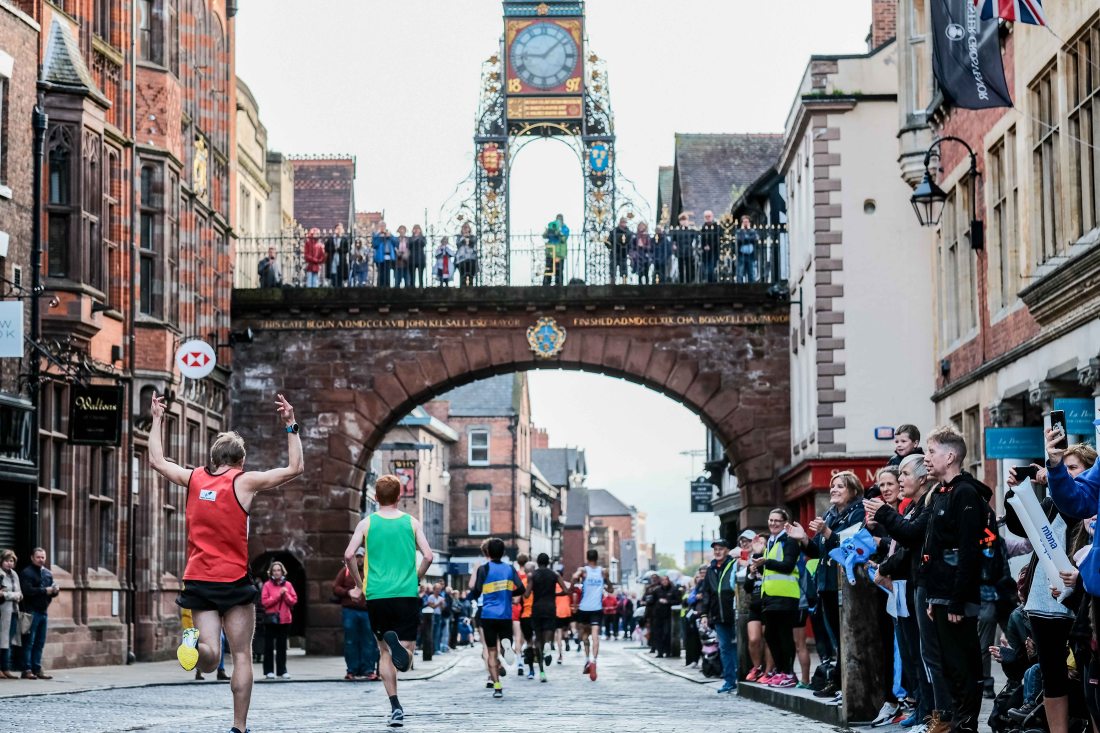
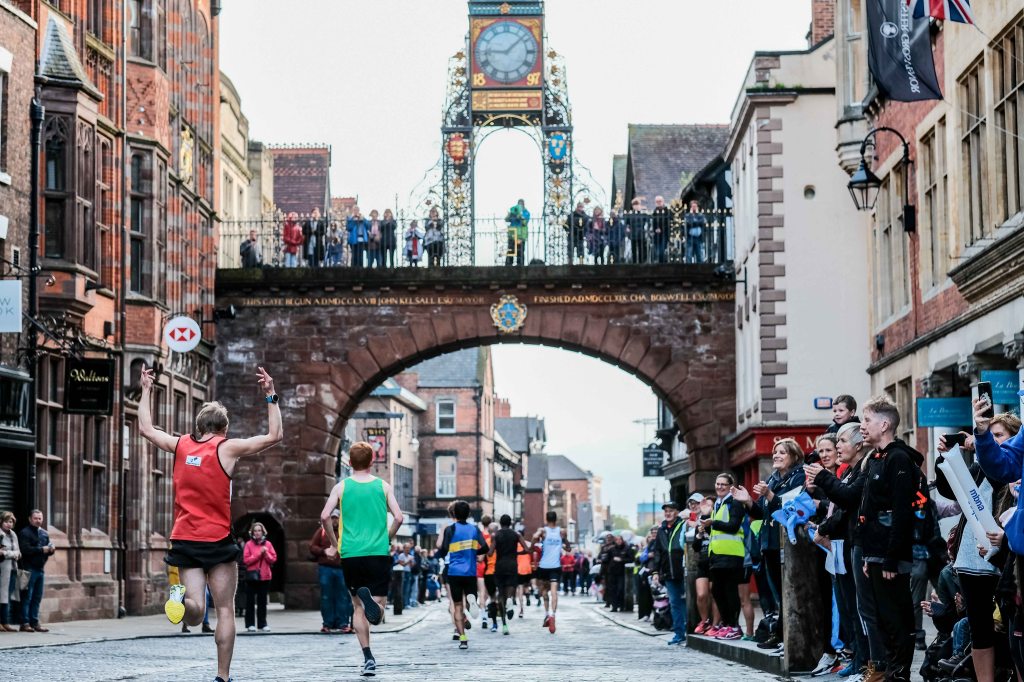
Chester Marathon runners passing beneath Eastgate Clock.

Run: 5h 14m (39.8 miles) | Cross Train: 0h 00m | Gym: 0h 00m

Well, I ran a marathon.

I wasn’t sure that I’d be saying that a couple of weeks ago…

The build-up to Chester was rather different from the one I had imagined a few months ago. The 2:57 target has been put back to London in April. After the illness, and missed sessions and tight legs, the aim was to get to the start feeling reasonably healthy and remind myself what running a road marathon actually feels like. It has been three years since the last one. Apparently, they haven’t got any shorter.

Tuesday was my first run since the previous Wednesday. The throat was better, but there were still a few lingering cold symptoms and the legs felt tight. The easy runs that followed were about getting moving again, rather than proving anything. Heart rate remained a little high for the pace, so there was no temptation to squeeze in the training I had missed. A couple of small strides on Thursday were enough; the cold morning was a good reason to keep things gentle.

I was disappointed to miss my swim this week. Even when there is a scheduling problem with the coach, I need to be a little more disciplined about making it happen. This week, though, the marathon rather took over.

By Friday I felt relaxed about Sunday. The rough plan was to enjoy the first ten miles, then hold or push for the next ten before reassessing with 10km to go. Sub-three was off the table; the right side of 3:10 would have been nice, but I was happy to see what the day brought. No pressure on the clock did not mean forgetting that there was still a very long way to run.

Chester Marathon runners passing beneath Eastgate Clock.
Chester Marathon beneath Eastgate Clock, 2019. Photo: Visit Chester / In Chester Walls.

Race morning was straightforward: porridge with honey two hours before the start, two black coffees and some Lucozade to sip. No overnight snack. I carried six gels, with a plan to collect another three on the course. I also avoided drinking excessively before the start, relying on the previous day’s hydration and the regular water stations rather than setting myself up for an early toilet stop.

I felt strong through the first nine miles, although I wondered whether the early part of the course was helping. The splits put that feeling into context: those nine miles averaged about 7:10/mile, with mile nine at 7:11 and an average heart rate of 167bpm. The hills clearly influenced individual miles — mile four was 7:20 at 171bpm with a climb, while the downhill fifth mile was 6:57 at 166bpm — rather than the opening section being uniformly downhill. It was a familiar feeling after the Great North Run. With no further proper strength, tempo or long runs since then, there was only so much endurance I could expect to call on.

With ten miles still to go, I consciously eased the effort. That was a sensible adjustment to keep the race controlled. Interestingly, the pace did not change immediately: mile sixteen was still 7:11 at 173bpm and mile seventeen 7:14 at 175bpm. The first clear slowdown came at mile eighteen, at 7:41, with heart rate still averaging 175bpm. So my decision to ease back and the change visible on the watch were not quite the same moment. The final 10km felt like survival, and the later splits reflect that: miles twenty-one to twenty-six averaged about 8:18/mile, compared with roughly 7:10 for the first seventeen. Heart rate stayed between 175 and 177bpm across those final six full miles, despite the slower pace, and reached an average of 179bpm in the last recorded 0.3 miles. Slower certainly did not feel easier. Heart rate alone cannot tell the whole story, but the figures sit alongside the memory of working hard to keep moving. I stayed committed and kept running to the finish, and I’m pleased with that bit of mental toughness.

The admin side went very well. Zero GI issues, water at every station, no dizziness and no chafing. Conditions were cool but bright, and the fuelling and hydration felt pretty much bang on. Those are useful things to take from the day, particularly with London already in mind.

The hamstrings and deltoids were very tight afterwards, but the immediate verdict, fifteen minutes after finishing, came with a big smile. I had adjusted to the fitness I actually had, made a sensible decision when it mattered and kept running to the finish. London can have the stopwatch.

For now, I’m looking forward to recovery, some easy autumn running and that trip to the Lake District. Maybe I’ll explore some MAF training…

Do we need supplements?

Generic supplements alongside a selection of whole foods

Starting from first principles: do we need supplements—for everyday life, sport or getting older?

The word suggests something extra. So what are we adding, and why? Are we filling a nutritional gap, looking for a performance benefit, or buying reassurance? Those are different questions.

Before reaching for a test, perhaps the simplest starting point is to look at what I eat and how it measures up. That won’t tell me everything, but it seems a sensible place to begin.

I recently stopped taking Vitals by Heights after trying it for a while. The scientific explanations appealed to me, and the story was convincing. Add the steady reminders about what apparently starts declining at my age, and I was an easy sell.

I haven’t noticed any difference since stopping. But I don’t feel different taking creatine either. I value its research backing—and its relatively modest price.

So “do I feel different?” isn’t enough to judge whether something works. Although it does help. Coffee remains my number one: I’ve found THE brand for me, I love it, and I can feel it.

That brings me back to Vitals. Could it have been filling gaps I hadn’t noticed? And if so, could I fill them through food instead? Given the choice, I’d rather improve my diet than add another supplement.

I’ve looked at what Vitals actually provides: the ingredients, the doses, and how they compare with recommended intakes. I’ve also explored whether being an amateur endurance athlete—or simply getting older—changes those needs.

NAD+ and NMN can wait for a separate post. One rabbit hole at a time.

My conclusion for now

For now, I haven’t found a clear nutritional reason to go back to Vitals. It supplies useful nutrients, but several B-vitamin doses are many times the daily reference intake, and a bigger number on the label does not, by itself, establish a bigger benefit.

I was reassured by the food comparison. My diet includes meat, fish, plenty of fruit and vegetables, nuts and seeds, so many of the nutrients in Vitals are likely already covered. That is a reasonable starting assumption, rather than proof: portions, frequency and absorption still matter.

I also don’t immediately assume that approaching 50 and training regularly means I need the enhanced doses in the bottle.

Vitamin D is the clearest exception to a simple “food should cover it” approach. UK guidance is to consider 10 µg daily in autumn and winter, compared with the 45 µg in Vitals. Others, like Omega-3 and iodine depend on the fish and dairy I actually eat, and I’m conscious that iron may need attention.

So my current view is that much of what Vitals offers is potentially already covered by my diet, and I can simply top up on the exceptions above*. This should be much more affordable than regular branded supplementing. *Subject to checking the absorption of the proposed supplements.

The tables and sources below show how I reached this provisional view. View the Vitals comparison or the food examples.

6 October 2026: Vitals and food sources

These tables compare the current Vitals⁺ formula with daily reference intakes and food sources. The reference is a healthy man around 50 training 8–10 hours a week. Training does not automatically raise every vitamin requirement or its safety limit; these are starting references, not individually measured needs.

Table 1: What Vitals provides

Vitals doses are for two capsules daily. Recommended intakes below use UK Reference Nutrient Intakes (RNIs), with EFSA adequate intakes marked *. These differ from the generic Nutrient Reference Values (NRVs) on supplement labels. Upper limits are safety ceilings, not intake targets.

IngredientVitals daily doseDaily reference intakeAdult upper limit¹
Vitamin A151 µg700 µg3,000 µg preformed vitamin A
B1 — thiamin30 mg1 mgNot established
B2 — riboflavin30 mg1.3 mgNot established
B3 — niacin30 mg16.5 mg niacin equivalents900 mg nicotinamide²
B5 — pantothenic acid49 mg5 mg*Not established
B68 mg1.4 mg12 mg
B7 — biotin50 µg40 µg*Not established
B9 — folate, as 5-MTHF500 µg200 µg dietary folate³1,000 µg added/supplemental folate³
B1225 µg1.5 µgNot established
Vitamin C92 mg40 mgNot established
Vitamin D345 µg / 1,800 IU10 µg / 400 IU100 µg / 4,000 IU
Vitamin E31 mg13 mg*300 mg
Iron5 mg8.7 mg40 mg safe level⁴
Zinc7.5 mg9.5 mg25 mg
Selenium55 µg75 µg255 µg
Iodine152 µg140 µg600 µg
Chromium100 µgNo EFSA requirement establishedNot established
Omega-3 — EPA + DHA375 mg: EPA 125 + DHA 250250 mg combined*No formal UL established
Blueberry/bilberry extract80 mg, including 29 mg anthocyaninsNo recommended intake establishedNot established

¹ Limits generally cover food plus supplements. “Not established” does not mean unlimited intake is safe. The vitamin A limit applies to retinol and retinyl esters; UK advice is more cautious about long-term high retinol intake, particularly as people get older.
² Vitals uses nicotinamide. Nicotinic acid has a much lower upper limit of 10 mg.
³ Natural food folate and supplemental 5-MTHF differ in bioavailability, so this is not a direct dose-for-dose comparison. The folate upper limit covers added/supplemental folate and excludes naturally occurring food folate.
⁴ Iron’s 40 mg figure is an EFSA safe level, not a formal upper limit or a recommended dose.

Table 2: Food contributions towards those intakes

These are examples of realistic portions, not a daily menu. Some meet the reference intake; others contribute alongside the rest of a varied diet. Amounts are rounded estimates and vary by food, preparation and source. Meat and fish weights are cooked, or drained for canned fish. Click a nutrient name for its food-composition source.

NutrientDaily reference intakeExample portions and approximate contribution
Vitamin A700 µgOne baked sweet potato provides ample vitamin A activity from beta-carotene; carrots and leafy greens also contribute.
B1 — thiamin1 mg150 g pork chop ≈ 0.7 mg + ½ cup cooked black beans ≈ 0.4 mg: ≈ 1.1 mg.
B2 — riboflavin1.3 mg250 ml milk ≈ 0.5 mg + two eggs ≈ 0.4 mg + 30 g almonds ≈ 0.3 mg: ≈ 1.2 mg.
B3 — niacin16.5 mg equivalents150 g grilled chicken breast ≈ 18 mg niacin, before the contribution from dietary tryptophan.
B5 — pantothenic acid5 mg*150 g chicken ≈ 2.3 mg + half an avocado ≈ 1 mg + two eggs ≈ 1.4 mg + ½ cup cooked broccoli ≈ 0.5 mg: ≈ 5.2 mg.
B61.4 mg150 g chicken ≈ 0.9 mg + one banana ≈ 0.4 mg + one cup boiled potatoes ≈ 0.4 mg: ≈ 1.7 mg.
B7 — biotin40 µg*Two cooked eggs ≈ 20 µg + 150 g canned pink salmon ≈ 9 µg: ≈ 29 µg. Other foods contribute; biotin food data are less complete.
B9 — folate200 µg½ cup cooked spinach ≈ 131 µg + four cooked asparagus spears ≈ 89 µg: ≈ 220 µg.
B121.5 µg100 g cooked Atlantic salmon ≈ 3 µg; alternatively, 250 ml milk contributes ≈ 1.3 µg.
Vitamin C40 mgOne orange ≈ 70 mg, one kiwi ≈ 64 mg, or ½ cup raw red pepper ≈ 95 mg.
Vitamin D10 µg100 g cooked sockeye salmon ≈ 17 µg. Content varies by species; occasional fish meals do not ensure adequate intake throughout the week.
Vitamin E13 mg*30 g almonds ≈ 7.2 mg + 25 g sunflower seeds ≈ 6.5 mg: ≈ 13.7 mg.
Iron8.7 mg150 g braised beef ≈ 3.5 mg + ½ cup cooked lentils ≈ 3 mg + 30 g cashews ≈ 2 mg: ≈ 8.5 mg. Absorption differs between foods.
Zinc9.5 mg150 g cooked beef ≈ 6.7 mg + 30 g pumpkin seeds ≈ 2.3 mg + 250 ml milk ≈ 1 mg: ≈ 10 mg.
Selenium75 µg100 g canned sardines ≈ 53 µg + two eggs ≈ 30 µg: ≈ 83 µg.
Iodine140 µg200 ml cow’s milk ≈ 50–100 µg + 150 g yoghurt ≈ 50–100 µg + one egg ≈ 25 µg: ≈ 125–225 µg.
Omega-3 — EPA + DHA250 mg average*One 140 g cooked Atlantic salmon portion supplies roughly 2.6–3 g: ≈ 370–430 mg/day averaged over a week.
ChromiumNo EFSA requirement establishedNo established requirement to match Vitals’ 100 µg.
AnthocyaninsNo established requirementBerries can form part of a varied diet; there is no established requirement to match the extract’s dose.

A varied diet cannot by itself confirm nutrient status. Vitamin D is a particular limitation of a food-only approach: UK guidance is to consider a 10 µg daily supplement in autumn and winter. Dietary assessment and, where appropriate, blood tests can help identify individual gaps.

Sources: Heights Vitals⁺ formula; UK government dietary recommendations; EFSA upper-limit summary (August 2025); EFSA adequate intakes for B5, biotin, vitamin E and EPA/DHA; NHS vitamin D guidance; NHS vitamin A guidance; IOC consensus on supplements and athletes. Checked 6 October 2026.

Week 40: 28 September – 4 October

A quiet leaf-covered path beneath autumn trees, with countryside beyond.

Run: 2h 10m (14.8 miles) | Cross Train: 0h 33m | Gym: 0h 00m

This was a cautious week of getting back into a regular routine. The running total was modest, but after a disrupted spell it was good simply to string some easy runs together again without feeling any need to chase the mileage.

The runs were all kept easy and deliberately low-key. Heart rate was still higher than it should normally be for the pace and effort, although that is probably to be expected while getting back to normal after illness and time away from running. For now, simply being able to run comfortably again feels more useful than turning every outing into a fitness test.

I also had my regular half an hour in the pool with my swim coach. Swimming at the moment is almost entirely technique-focused, so the clock is fairly irrelevant. The work is still about slowing the stroke down, improving the breathing and trying to make the whole thing feel a little less hurried.

Next week’s focus is on getting the legs moving normally again. I’ll introduce a little faster running or tempo work if everything continues to settle, but only in small doses. There is no fitness to be gained by suddenly trying to squeeze missed sessions into the final few days. With Chester Marathon now very close, arriving healthy matters rather more than trying to rescue the training block at the last minute.

Beyond Chester, I’m actually looking forward to taking the pressure off for a while. Autumn is probably my favourite time to run, so there should be a few weeks of easy running simply because I fancy going out, rather than because a training plan says I should. I’m particularly looking forward to a trip to the Lake District after the marathon — hopefully with no pace targets, no tempo miles and considerably more interest in the scenery.

Week 39: 21–27 September

Run: 0h 27m (2.5 miles) | Cross Train: 0h 33m | Gym: 0h 00m

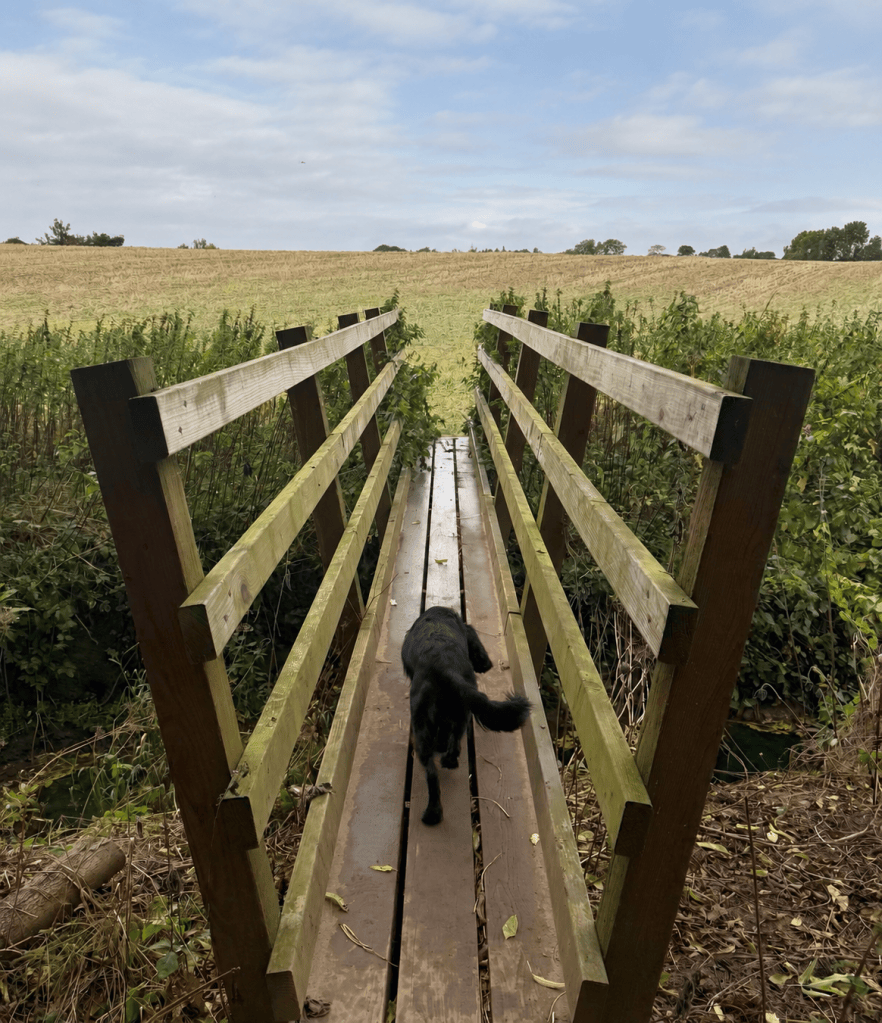
Black cocker spaniel crossing a wooden footbridge beside a field under a lightly blue overcast sky.

Exercise this week has been almost entirely dog-walking, whilst waiting for the cough to clear and trying not to make a bad situation worse.

By Friday I was still coughing, although less than earlier in the week, and still hadn’t managed a test run. With Chester getting very close, I’ve more or less accepted that it is no longer going to be the sub-three-hour attempt I had been training towards. That’s frustrating after putting together a decent block through the summer, but there isn’t much point pretending the last couple of weeks haven’t happened.

The thinking now is that Chester may end up being an extended easy run rather than a race. If I get there feeling reasonably healthy, one option is to run the first half very conservatively and then pick things up if everything feels good. More importantly, everything from here starts to feed into London in April. There is probably more value in arriving at that training block healthy than trying to rescue a marathon performance from a fortnight disrupted by illness.

I did at least get back in the pool this week. I’m still rushing the stroke, particularly on the left side, and struggling to get enough air in. The focus is on keeping my head flatter in the water and rotating sideways rather than lifting it to breathe, with a little more rotation to get my mouth properly clear. It remains one of those things that sounds very straightforward when somebody explains it from the side of the pool.

Sunday finally brought a very tentative 2.5-mile test run. There was no headache, nausea or anything concerning in the chest, which was encouraging. My throat is still noticeable painful when swallowing, though, and the hamstrings felt surprisingly tight after the lay-off. Heart rate was also much higher than I would normally expect for the pace, although after nearly two weeks without running while fighting off a virus that probably isn’t especially surprising.

So, 2.5 miles is hardly the triumphant return I might have imagined at this point in a marathon plan, but at least it is a start. I’ll try another short and easy run tomorrow and see whether the heart rate and general feel begin to settle. There is certainly no mileage to be made up now.

Week 38: 14 – 20 September

Run: 0h 00m (0.0 miles) | Cross Train: 0h 34m | Gym: 0h 00m

There are weeks when the training plan dictates what happens, and there are weeks when your body makes the decision for you. This was very definitely one of the latter.

I came into Monday with sore quads from the Great North Run and was quite happy to take a complete rest day, other than walking the dog. After that, though, what should have been a straightforward few days of post-race recovery turned into something rather different.

By Tuesday a bad throat and cough were properly established, which meant another day without training. Then on Wednesday morning I fainted in the shower. I have a recognised vasovagal sensitivity, so the episode itself wasn’t entirely unfamiliar territory; tiredness, stress and a viral infection just seemed to provide the perfect combination. It did, however, make the decision about whether I should train that day remarkably straightforward.

The only recorded training of the week was my first swimming lesson back after the summer on Friday. Even that wasn’t particularly convincing. We’re trying to move my breathing from every two strokes to every three, which means breathing to both sides, and I was struggling for breath on the left. It was difficult to know how much was technique and how much was simply the lingering virus. Either way, 725 metres was enough.

The difficult part of a week like this isn’t really missing the running. It’s watching the calendar move on while doing it.

Chester Marathon is now only three weeks away and I haven’t run since the Great North Run. I’ve spent months building towards a sub-three-hour marathon, so inevitably there’s a temptation to start calculating how much fitness I’m losing and how quickly I can get back into the Hansons Marathon programme.

I’m trying not to do that.

Amsterdam Marathon is a week after Chester and has suddenly become a possible alternative. There appear to be resale places available and, rather conveniently, my daughter will be in Amsterdam that weekend playing hockey. An extra week sounds attractive after losing this one, although it may prove fairly meaningless: if the virus takes long enough to clear that I’m no longer in shape to have a proper crack at sub-three, seven extra days aren’t magically going to fix it.

So for now there isn’t a decision to make. The priority is simply getting well enough to run again.

It’s frustrating, but perhaps there’s something useful in weeks like this too. Serious training encourages you to believe that progress comes from continually doing more. Occasionally the more difficult discipline is accepting that doing absolutely nothing is the thing most likely to get you where you want to go.

Week 37: 7 – 13 September

Run: 5h 09m (39.1 miles) | Cross Train: 0h 00m | Gym: 0h 00m

A deliberately lighter week ahead of the Great North Run, keeping some quality in the legs without carrying unnecessary fatigue into Sunday.

The main session before the race was Tuesday’s treadmill work, with faster running surrounded by plenty of recovery. After that the mileage tapered away: easy running, a short Thursday outing and a very brief Saturday shakeout.

Sunday was the Great North Run. I finished in 1:27:25, running strongly through the first nine miles before easing the effort a little as heart rate sat stubbornly in the 170s. The race averaged 170 bpm and peaked at 177, so it was a proper effort without completely emptying the tank.

Great North Run 2026 finisher medal

With the Chester Marathon the main target, the compromise made sense to me. A half marathon four weeks out needs to test the fitness without becoming the event that derails the marathon build.

The result is a useful marker: a strong first part of the race, a conscious decision not to chase the clock at any cost, and further evidence that the marathon work has put me in decent shape.

Week 36: 31 August – 6 September

Tyne Bridge and Newcastle quayside in early morning light

Run: 7h 09m (53.1 miles) | Cross Train: 0h 00m | Gym: 0h 00m

The mileage has come back slightly from last week’s peak but still lands above 50, with another strong tempo session sitting in the middle of it.

Thursday brought the week’s key benchmark: a nine-mile tempo averaging 6:37/mile. Tuesday contained another block of faster work and recoveries.

The weekend has been deliberately less dramatic than last week: 10 miles on Saturday and another 10 on Sunday, both controlled in the mid-7:30 range. The heart-rate figures were almost identical, a nice sign of consistency.

With the Great North Run only a week away, the heaviest work is now in the bank.