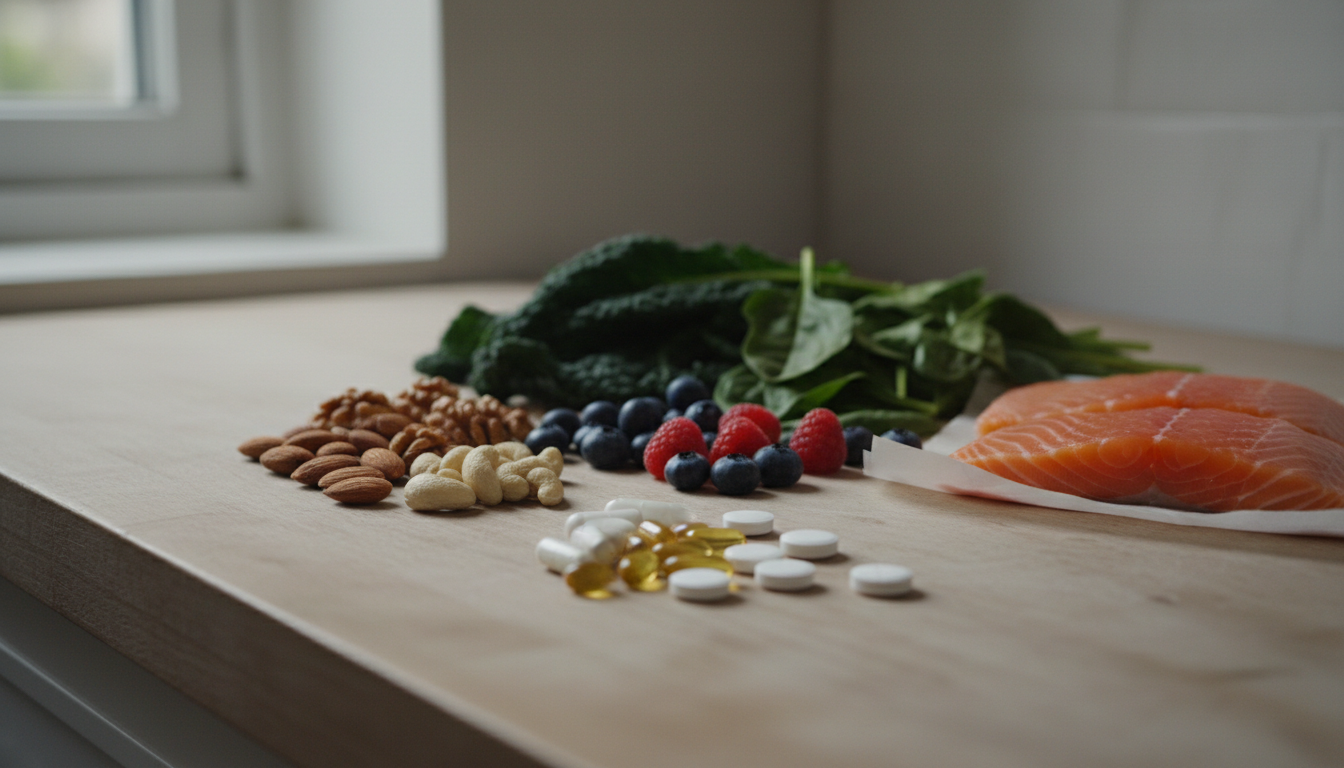
Starting from first principles: do we need supplements—for everyday life, sport or getting older?
The word suggests something extra. So what are we adding, and why? Are we filling a nutritional gap, looking for a performance benefit, or buying reassurance? Those are different questions.
Before reaching for a test, perhaps the simplest starting point is to look at what I eat and how it measures up. That won’t tell me everything, but it seems a sensible place to begin.
I recently stopped taking Vitals by Heights after trying it for a while. The scientific explanations appealed to me, and the story was convincing. Add the steady reminders about what apparently starts declining at my age, and I was an easy sell.
I haven’t noticed any difference since stopping. But I don’t feel different taking creatine either. I value its research backing—and its relatively modest price.
So “do I feel different?” isn’t enough to judge whether something works. Although it does help. Coffee remains my number one: I’ve found THE brand for me, I love it, and I can feel it.
That brings me back to Vitals. Could it have been filling gaps I hadn’t noticed? And if so, could I fill them through food instead? Given the choice, I’d rather improve my diet than add another supplement.
I’ve looked at what Vitals actually provides: the ingredients, the doses, and how they compare with recommended intakes. I’ve also explored whether being an amateur endurance athlete—or simply getting older—changes those needs.
NAD+ and NMN can wait for a separate post. One rabbit hole at a time.
My conclusion for now
For now, I haven’t found a clear nutritional reason to go back to Vitals. It supplies useful nutrients, but several B-vitamin doses are many times the daily reference intake, and a bigger number on the label does not, by itself, establish a bigger benefit.
I was reassured by the food comparison. My diet includes meat, fish, plenty of fruit and vegetables, nuts and seeds, so many of the nutrients in Vitals are likely already covered. That is a reasonable starting assumption, rather than proof: portions, frequency and absorption still matter.
I also don’t immediately assume that approaching 50 and training regularly means I need the enhanced doses in the bottle.
Vitamin D is the clearest exception to a simple “food should cover it” approach. UK guidance is to consider 10 µg daily in autumn and winter, compared with the 45 µg in Vitals. Others, like Omega-3 and iodine depend on the fish and dairy I actually eat, and I’m conscious that iron may need attention.
So my current view is that much of what Vitals offers is potentially already covered by my diet, and I can simply top up on the exceptions above*. This should be much more affordable than regular branded supplementing. *Subject to checking the absorption of the proposed supplements.
The tables and sources below show how I reached this provisional view. View the Vitals comparison or the food examples.
6 October 2026: Vitals and food sources
These tables compare the current Vitals⁺ formula with daily reference intakes and food sources. The reference is a healthy man around 50 training 8–10 hours a week. Training does not automatically raise every vitamin requirement or its safety limit; these are starting references, not individually measured needs.
Table 1: What Vitals provides
Vitals doses are for two capsules daily. Recommended intakes below use UK Reference Nutrient Intakes (RNIs), with EFSA adequate intakes marked *. These differ from the generic Nutrient Reference Values (NRVs) on supplement labels. Upper limits are safety ceilings, not intake targets.
| Ingredient | Vitals daily dose | Daily reference intake | Adult upper limit¹ |
|---|---|---|---|
| Vitamin A | 151 µg | 700 µg | 3,000 µg preformed vitamin A |
| B1 — thiamin | 30 mg | 1 mg | Not established |
| B2 — riboflavin | 30 mg | 1.3 mg | Not established |
| B3 — niacin | 30 mg | 16.5 mg niacin equivalents | 900 mg nicotinamide² |
| B5 — pantothenic acid | 49 mg | 5 mg* | Not established |
| B6 | 8 mg | 1.4 mg | 12 mg |
| B7 — biotin | 50 µg | 40 µg* | Not established |
| B9 — folate, as 5-MTHF | 500 µg | 200 µg dietary folate³ | 1,000 µg added/supplemental folate³ |
| B12 | 25 µg | 1.5 µg | Not established |
| Vitamin C | 92 mg | 40 mg | Not established |
| Vitamin D3 | 45 µg / 1,800 IU | 10 µg / 400 IU | 100 µg / 4,000 IU |
| Vitamin E | 31 mg | 13 mg* | 300 mg |
| Iron | 5 mg | 8.7 mg | 40 mg safe level⁴ |
| Zinc | 7.5 mg | 9.5 mg | 25 mg |
| Selenium | 55 µg | 75 µg | 255 µg |
| Iodine | 152 µg | 140 µg | 600 µg |
| Chromium | 100 µg | No EFSA requirement established | Not established |
| Omega-3 — EPA + DHA | 375 mg: EPA 125 + DHA 250 | 250 mg combined* | No formal UL established |
| Blueberry/bilberry extract | 80 mg, including 29 mg anthocyanins | No recommended intake established | Not established |
¹ Limits generally cover food plus supplements. “Not established” does not mean unlimited intake is safe. The vitamin A limit applies to retinol and retinyl esters; UK advice is more cautious about long-term high retinol intake, particularly as people get older.
² Vitals uses nicotinamide. Nicotinic acid has a much lower upper limit of 10 mg.
³ Natural food folate and supplemental 5-MTHF differ in bioavailability, so this is not a direct dose-for-dose comparison. The folate upper limit covers added/supplemental folate and excludes naturally occurring food folate.
⁴ Iron’s 40 mg figure is an EFSA safe level, not a formal upper limit or a recommended dose.
Table 2: Food contributions towards those intakes
These are examples of realistic portions, not a daily menu. Some meet the reference intake; others contribute alongside the rest of a varied diet. Amounts are rounded estimates and vary by food, preparation and source. Meat and fish weights are cooked, or drained for canned fish. Click a nutrient name for its food-composition source.
| Nutrient | Daily reference intake | Example portions and approximate contribution |
|---|---|---|
| Vitamin A | 700 µg | One baked sweet potato provides ample vitamin A activity from beta-carotene; carrots and leafy greens also contribute. |
| B1 — thiamin | 1 mg | 150 g pork chop ≈ 0.7 mg + ½ cup cooked black beans ≈ 0.4 mg: ≈ 1.1 mg. |
| B2 — riboflavin | 1.3 mg | 250 ml milk ≈ 0.5 mg + two eggs ≈ 0.4 mg + 30 g almonds ≈ 0.3 mg: ≈ 1.2 mg. |
| B3 — niacin | 16.5 mg equivalents | 150 g grilled chicken breast ≈ 18 mg niacin, before the contribution from dietary tryptophan. |
| B5 — pantothenic acid | 5 mg* | 150 g chicken ≈ 2.3 mg + half an avocado ≈ 1 mg + two eggs ≈ 1.4 mg + ½ cup cooked broccoli ≈ 0.5 mg: ≈ 5.2 mg. |
| B6 | 1.4 mg | 150 g chicken ≈ 0.9 mg + one banana ≈ 0.4 mg + one cup boiled potatoes ≈ 0.4 mg: ≈ 1.7 mg. |
| B7 — biotin | 40 µg* | Two cooked eggs ≈ 20 µg + 150 g canned pink salmon ≈ 9 µg: ≈ 29 µg. Other foods contribute; biotin food data are less complete. |
| B9 — folate | 200 µg | ½ cup cooked spinach ≈ 131 µg + four cooked asparagus spears ≈ 89 µg: ≈ 220 µg. |
| B12 | 1.5 µg | 100 g cooked Atlantic salmon ≈ 3 µg; alternatively, 250 ml milk contributes ≈ 1.3 µg. |
| Vitamin C | 40 mg | One orange ≈ 70 mg, one kiwi ≈ 64 mg, or ½ cup raw red pepper ≈ 95 mg. |
| Vitamin D | 10 µg | 100 g cooked sockeye salmon ≈ 17 µg. Content varies by species; occasional fish meals do not ensure adequate intake throughout the week. |
| Vitamin E | 13 mg* | 30 g almonds ≈ 7.2 mg + 25 g sunflower seeds ≈ 6.5 mg: ≈ 13.7 mg. |
| Iron | 8.7 mg | 150 g braised beef ≈ 3.5 mg + ½ cup cooked lentils ≈ 3 mg + 30 g cashews ≈ 2 mg: ≈ 8.5 mg. Absorption differs between foods. |
| Zinc | 9.5 mg | 150 g cooked beef ≈ 6.7 mg + 30 g pumpkin seeds ≈ 2.3 mg + 250 ml milk ≈ 1 mg: ≈ 10 mg. |
| Selenium | 75 µg | 100 g canned sardines ≈ 53 µg + two eggs ≈ 30 µg: ≈ 83 µg. |
| Iodine | 140 µg | 200 ml cow’s milk ≈ 50–100 µg + 150 g yoghurt ≈ 50–100 µg + one egg ≈ 25 µg: ≈ 125–225 µg. |
| Omega-3 — EPA + DHA | 250 mg average* | One 140 g cooked Atlantic salmon portion supplies roughly 2.6–3 g: ≈ 370–430 mg/day averaged over a week. |
| Chromium | No EFSA requirement established | No established requirement to match Vitals’ 100 µg. |
| Anthocyanins | No established requirement | Berries can form part of a varied diet; there is no established requirement to match the extract’s dose. |
A varied diet cannot by itself confirm nutrient status. Vitamin D is a particular limitation of a food-only approach: UK guidance is to consider a 10 µg daily supplement in autumn and winter. Dietary assessment and, where appropriate, blood tests can help identify individual gaps.
Sources: Heights Vitals⁺ formula; UK government dietary recommendations; EFSA upper-limit summary (August 2025); EFSA adequate intakes for B5, biotin, vitamin E and EPA/DHA; NHS vitamin D guidance; NHS vitamin A guidance; IOC consensus on supplements and athletes. Checked 6 October 2026.
Discover more from busyrunning
Subscribe to get the latest posts sent to your email.

