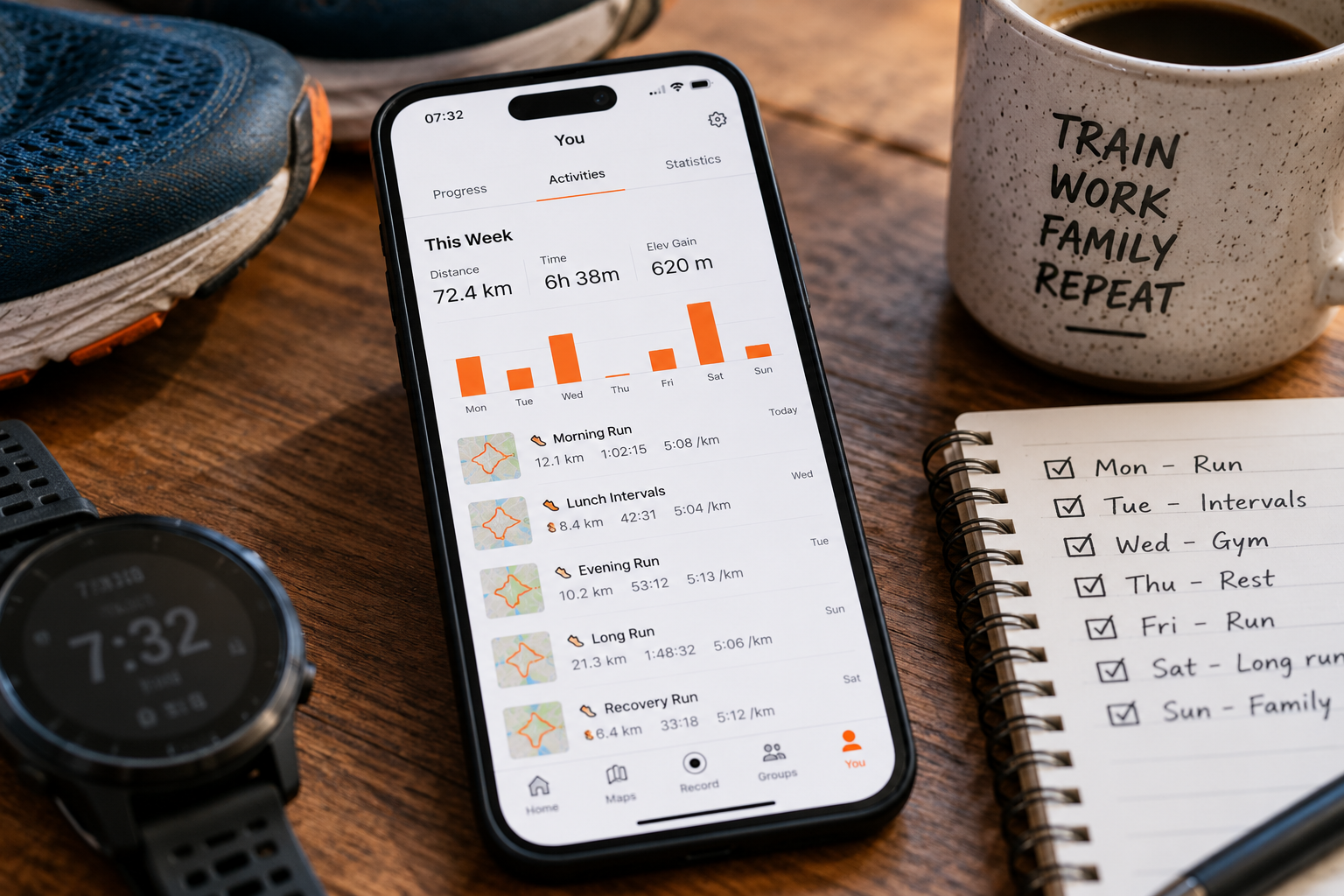
There was a period when I thought getting fitter largely meant doing more.
I’d be up before 6am and could train hard for two hours before starting work. Coffee would get me through the morning and, despite the early start, I often wouldn’t get to bed until close to midnight.
Everything felt rushed.
Work was busy enough that getting away from my desk for a lunchtime session often seemed impossible. Three evenings a week I’d run at least 10k while my son was at football training, because it seemed an efficient way of squeezing another session into the day. On the other evenings I was usually knackered. Once I sat down on the couch, getting back off it was increasingly difficult.
I was training a lot, but I seemed to spend much of the time feeling as though I was operating somewhere close to the edge.
More recently, something has changed.
My latest marathon block actually involved less training time than the periods when I was preparing for long trail races and 70.3 triathlons. Yet I generally felt sharper and in better fettle. I had more energy for work and, importantly, more energy for the kids.
I’ve also managed to reprioritise work enough to free up some time at lunchtime. Getting a couple of sessions done during the working day has taken some of the pressure away from those early mornings. I still need to get better at going to bed earlier, but it feels as though things are moving in the right direction.
Is working harder actually making us better?
Clearly, endurance sport requires work. There probably isn’t a clever shortcut that allows us to avoid the miles, the harder sessions and the consistency required to improve.
But perhaps the important number isn’t simply how much training we can complete.
Perhaps it is how much training we can recover from and adapt to.
A two-hour session before work doesn’t exist in isolation. If it means getting up before 6am after less than six hours’ sleep, rushing into a stressful working day, relying on caffeine to stay alert and then training again that evening, the physiological cost of that session might be rather different from the same workout performed by somebody who is properly rested.
Training itself is only the stimulus. The improvement comes afterwards.
That makes me wonder whether I spent periods accumulating an impressive amount of training without necessarily giving my body enough opportunity to benefit from all of it.
There is also a wider question about what we’re actually trying to optimise.
If another five hours of training each week produces a small improvement in race performance but leaves me permanently tired, less productive at work and with less energy for my family, is that actually better performance?
I’m increasingly unconvinced that it is.
Perhaps the aim isn’t to discover the maximum amount of training I can physically squeeze into seven days. It is to find the minimum effective training required to produce the improvement I’m looking for, then make sure I can absorb it.
That doesn’t mean making training easy.
The interesting possibility is almost the opposite: by removing some of the unnecessary volume and improving recovery, perhaps I can arrive at the sessions that really matter capable of working harder.
Less training. Better training.
So what does the evidence say?
That is what I want to explore.
How much does sleep affect endurance performance and adaptation? What happens when training load is combined with significant work and family stress? Can reducing volume while protecting the important sessions actually make an amateur endurance athlete faster?
And perhaps most importantly for somebody trying to fit endurance sport into an otherwise fairly normal life:
Where is the point at which doing more stops making us better?
Discover more from busyrunning
Subscribe to get the latest posts sent to your email.

