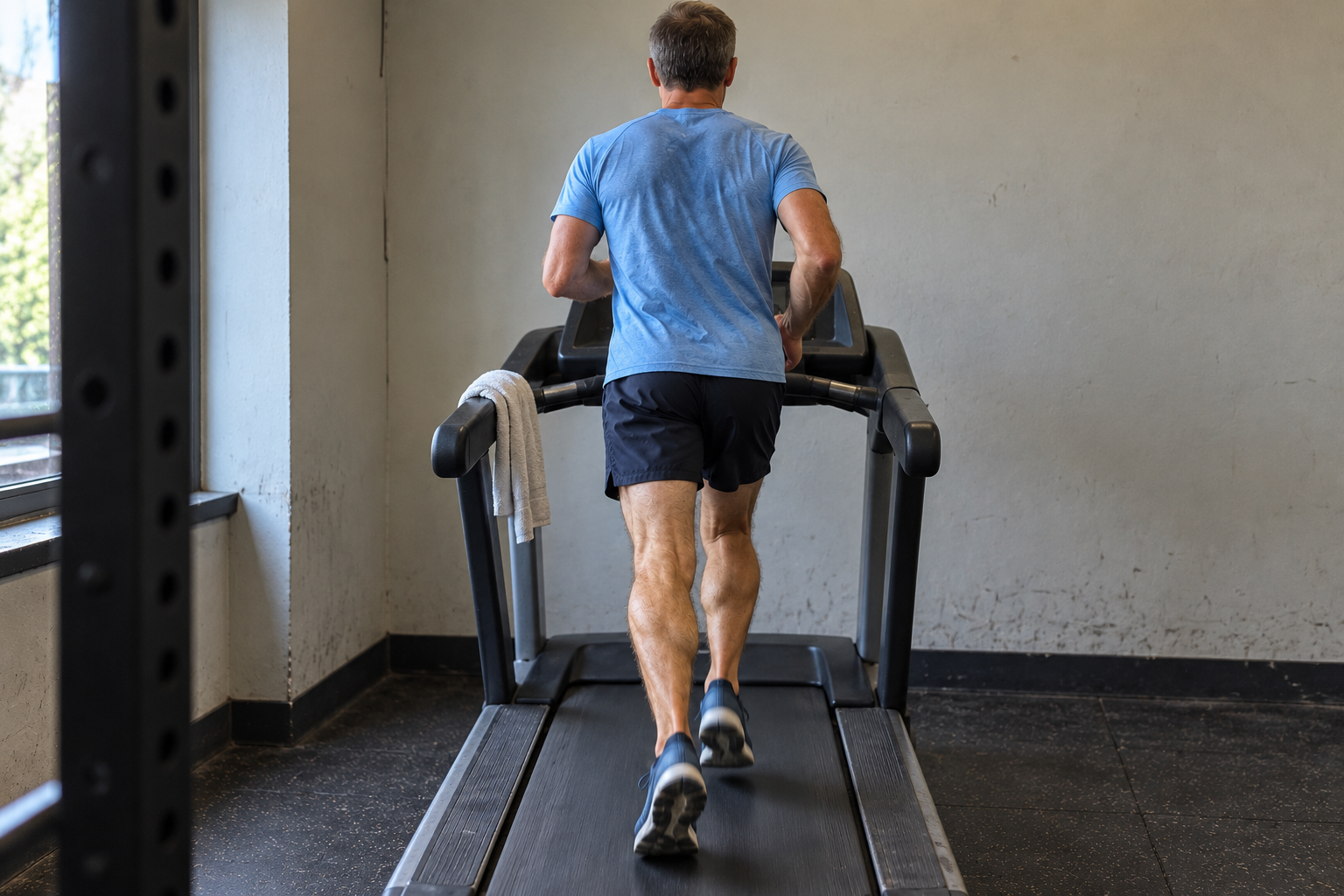
Can running slower help me run faster? With Chester behind me and roughly ten weeks before my next marathon training block, I have a useful opportunity to explore MAF training—and put myself through a small experiment.
MAF stands for Maximum Aerobic Function. Developed by Dr Phil Maffetone, the approach uses a heart-rate ceiling to keep training easy while building aerobic endurance and the capacity to use fat as fuel. The aim is to become faster at the same comfortable effort.
The familiar calculation is 180 minus your age, with adjustments for health and training history. At 49, that gives me 131 bpm before adjustments. Recent illness and interrupted training suggest a more cautious starting point of 126 bpm under Maffetone’s rules.
There is good science behind the benefits of easy endurance training. There is less certainty that this particular calculation identifies an individual’s aerobic threshold accurately. I’m treating it as a practical starting point, with an open mind about what the results will show.
My initial treadmill test is planned for Monday 19 October, provided I have recovered sufficiently from the marathon. I’ll then repeat the same test each Monday morning: the same fixed distance, the same target heart rate, and as consistent a set-up as possible, including the treadmill, incline, warm-up and cooling.
My Garmin does not accurately measure my treadmill pace, so I’ll calculate pace from the elapsed time taken to cover the fixed distance shown on the treadmill. I’ll use the watch to record heart rate, rather than letting its distance estimate decide whether I’m improving.
The question is simple: will I cover that distance more quickly at the same heart rate? I’ll also note how I feel and how well I recover. Early gains may reflect recovery from Chester and the recent illness, so I’ll look at the trend rather than celebrate every quicker test.
I’ll add the results here as the weeks unfold. Ten weeks, one willing guinea pig, and a little patience.
Further reading: Maffetone’s 180 formula and research on endurance-training adaptations.
Discover more from busyrunning
Subscribe to get the latest posts sent to your email.

